
How a Nobel Prize Molecule Could Add 20+ Years to Your Life | Chris Burres
Start Listening


Summary
In 1985, three scientists at Rice University discovered a carbon molecule so structurally perfect it eventually earned them the Nobel Prize in Chemistry. What nobody anticipated was what would happen when researchers gave it to rats — a 90% extension in lifespan, the longest longevity result ever recorded in mammalian history. Chris Burres has been manufacturing this molecule since 1991, five years before the Nobel Prize was awarded. He joins Dr. Brandon Crawford to break down how ESS60 (Carbon 60) works at the mitochondrial level, why it functions as a buffering oxidative stress system rather than a conventional antioxidant, and what the growing clinical evidence suggests about its effects on sleep, inflammation, cognition, and long-term healthspan.
Start Watching
Show Notes
Chris Burres came to this molecule not through biology but through engineering. His business partner was separating Carbon 60 at the Texas Center for Superconductivity at the University of Houston when a visiting scientist pointed out it was selling for $6,000 a gram and suggested they build a business around it. Their company, SES Research Inc., began delivering scientific-grade carbon nanomaterials to research institutions worldwide in 1991, providing the material that helped enable the research leading to the 1996 Nobel Prize in Chemistry. The pivot to human health came after the 2012 Baati study, in which Parisian researchers fed Carbon 60 dissolved in olive oil to rats expecting toxicity data and found instead that the treated group lived 90% longer. The study was not designed to find life extension. It found it anyway.
ESS60's primary mechanism of action is what Chris calls the Buffering Oxidative Stress System, or BOSS. Unlike conventional antioxidants that neutralize a free radical by becoming one themselves, ESS60's 60-carbon geodesic structure absorbs, neutralizes, and releases reactive oxygen species without being consumed in the reaction — meaning a single molecule can potentially neutralize thousands of free radicals over time. Mitochondria are the primary site of reactive oxygen species production in the body, and as mitochondrial function declines with age, the downstream cascade includes cellular damage, chronic inflammation, and disease. Dr. Crawford frames it directly: in his functional neurology practice, mitochondrial dysfunction appears as an underlying factor across virtually every patient population he works with.
The most consistent user-reported effects fall into four categories: improved sleep quality, enhanced mental clarity and energy, reduced pain and inflammation, and faster recovery. The sleep effect tends to appear first, often within the first week. ESS60 also cannot be patented — it is naturally occurring — which means no pharmaceutical company can justify the investment to bring it through FDA approval despite the remarkable research results. Chris is candid about this reality: it means the research will move slower, but it also means the molecule remains accessible without a prescription.
Key Takeaways
- ESS60 Is Not a Standard Antioxidant: Conventional antioxidants neutralize free radicals by becoming free radicals themselves. ESS60 buffers oxidative stress catalytically, meaning it is not consumed in the reaction and can potentially neutralize thousands of reactive oxygen species over time. This makes it mechanistically unique in the longevity supplement landscape.
- Mitochondrial Health Is the Root System: The reason ESS60's effects show up across such a wide range of outcomes — sleep, cognition, pain, inflammation, energy — is that mitochondrial dysfunction is the common upstream driver of most of those symptoms. Intervening at the mitochondrial level has downstream effects that show up almost everywhere.
- Processing Matters as Much as the Molecule: ESS60 and industrial C60 are not interchangeable. The purity, processing method, and delivery medium all determine whether the molecule is safe and bioavailable for human use. Source and quality matter as much as the compound itself.
- The Pharmaceutical Gap Is Real: The most promising longevity molecules are often the ones that cannot be patented. ESS60 is naturally occurring, which means no company can own it, which means no company will fund the trials needed to bring it through FDA approval. Understanding this structural reality is essential for anyone navigating the longevity science space.
Share the Love
If you like The Longevity Formula...Never miss an episode by subscribing via Apple Podcasts, Spotify, Amazon Music, or by RSS!
Mentioned Resources
- MyVitalC Exclusive Offers: 40% discount on 6-bottle bundle, $30 coupon, and 18 free biohacking tips when you use the link myvitalc.com/crawford
- Live Longer and Better by Chris Burres and Jerome Corsi (autographed copies available with proceeds supporting Operation Underground Railroad)
- Operation Underground Railroad — Non-profit combating child exploitation (100% of autograph fees donated)
- Live Beyond the Norms Podcast hosted by Chris Burres
- Follow MyVitalC on Instagram
- 2012 Baati Study — Peer-reviewed research showing 90% lifespan extension in Wistar rats
- SES Research Inc. — Manufacturing and research company (since 1991, Houston, Texas)
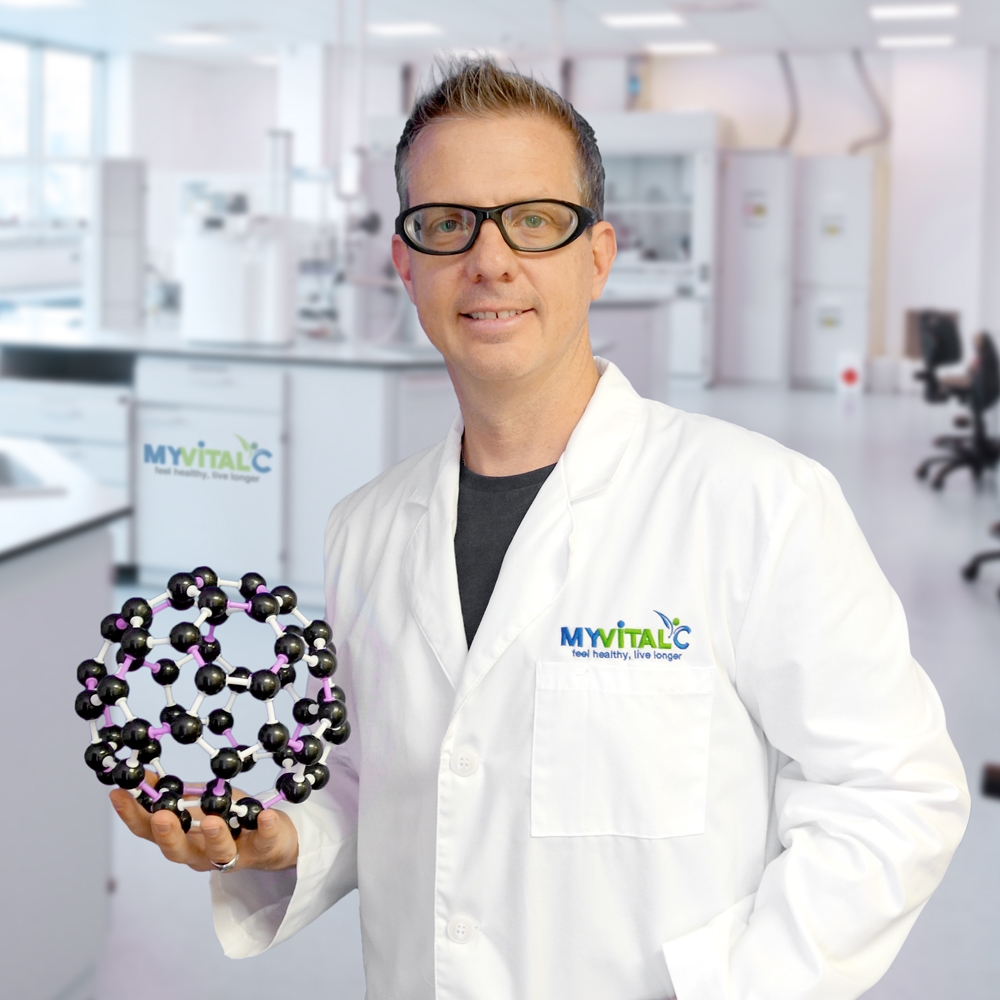
Chris Burres
Chris Burres is a mechanical engineer, research scientist, and co-founder of MyVitalC — the world's longest-standing manufacturer of ESS60 (Carbon 60). Since 1991, his company has produced scientific-grade carbon nanomaterials for research institutions worldwide, providing material that contributed to the 1996 Nobel Prize in Chemistry. Following the landmark 2012 Baati study showing a 90% lifespan extension in rats, Chris pivoted to human supplementation with a mission to help people live longer, healthier, pain-free lives through research-driven science.


Let's connect!
Whether you have questions, require consultation, or wish to invite Dr. Crawford to speak at your event or conference, we encourage you to reach out.
Talk With Dr. Crawford