
VSEL vs MUSE Stem Cells: What 750 Regenerative Procedures Taught Us About Which One Works | Dr. Jeri LaVigne
Start Listening


Summary
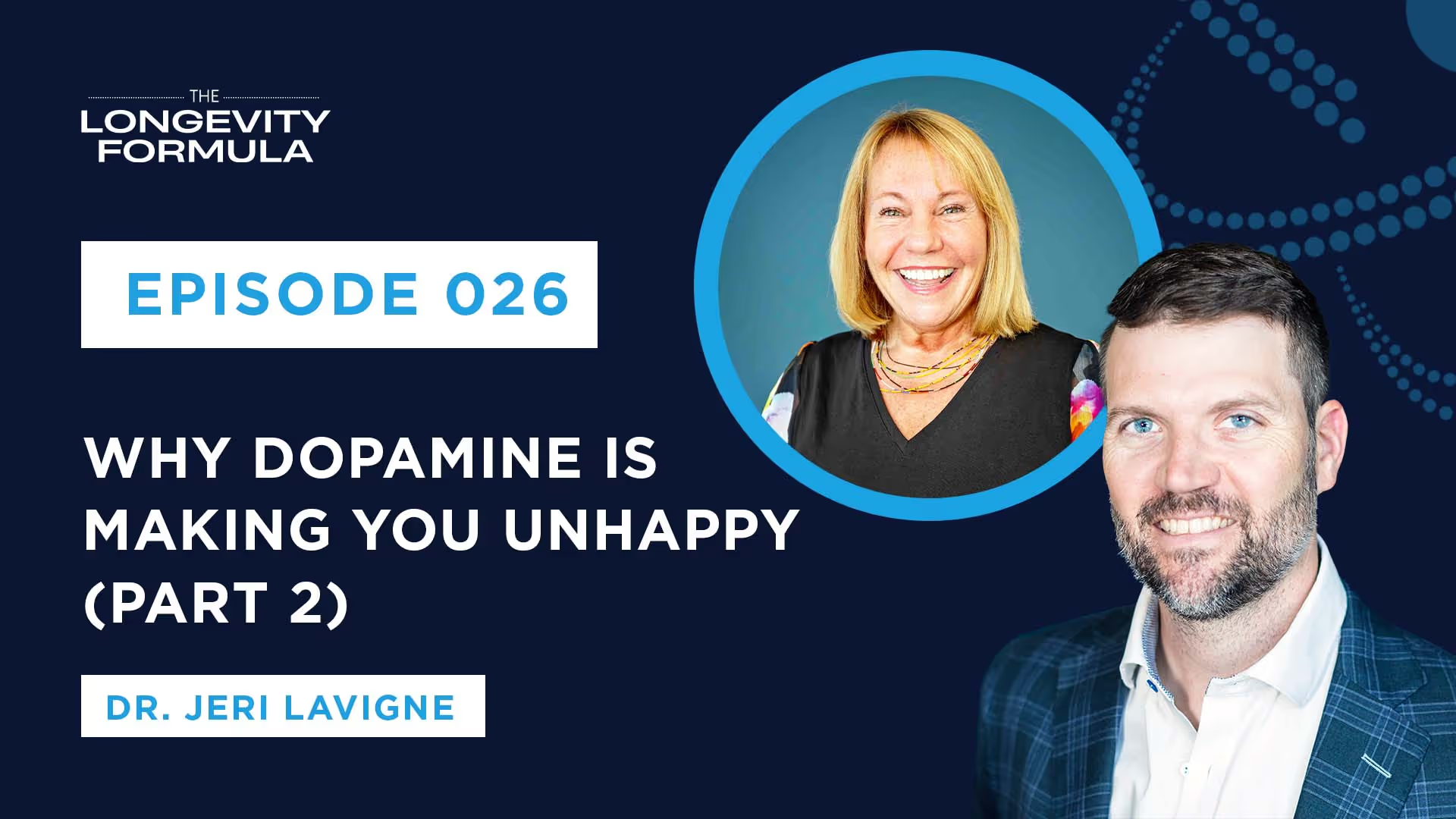
Dr. Brandon Crawford, DC, FIBFN-CND, welcomes his most-featured guest, integrative psychologist Dr. Jeri LaVigne, EdD, PhD, for a fourth conversation built on three and a half years and more than 750 regenerative procedures performed side by side. LaVigne, herself a traumatic brain injury survivor who turned to functional neurology after conventional medicine dismissed her symptoms, explains why regeneration depends on "favorable conditions" — you can't plant a crop in damaged soil and expect it to thrive.
Start Watching
Show Notes
Four conversations in, this is the one built on data instead of theory.
Dr. Brandon Crawford and Dr. Jeri LaVigne have run more than 750 regenerative procedures together over three and a half years, and this episode is their attempt to update everything they've learned since their last conversation. LaVigne opens with the principle underneath the clinic's entire approach — regeneration only works when the conditions are favorable — before the two move into the clinical mechanics: what priming the body, brain, and mind actually looks like, why a temporary uptick in seizures can be a good sign, and how the clinic decides between VSEL and the newly available Dezawa MUSE cells.
Key Takeaways
Here's what stood out from their conversation:
- Favorable conditions first: LaVigne's central finding from 750+ procedures is that regeneration isn't something you can inject — it depends on preparing the body, brain, and mind beforehand, the way a farmer has to prepare soil before planting.
- Seizure spikes can mean progress: Crawford explains why a temporary uptick in seizure activity after a procedure often signals the brain recalibrating and building new connectivity, not a setback.
- VSEL, explained: Very small embryonic-like stem cells are autologous (the patient's own cells), separated from plasma, laser-activated, and readministered — distinct from PRP or adipose-derived cell therapies.
- Laser-guided homing: Red laser light makes tissue "tacky" so cells stick where needed; green laser light helps home the cells to the right location.
- Extracellular vesicles as fertilizer: EVs are nanoparticles that stem cells release to do the reparative work — adding a concentrated dose alongside VSEL is meant to magnify the effect, and the two stress that sourcing and concentration vary wildly across providers.
- Dezawa MUSE cells: A newly legal option in Texas that works by an entirely different mechanism — engulfing and replacing damaged cells rather than paracrine signaling — with over 120 peer-reviewed publications behind it.
- Choosing VSEL vs. MUSE: The clinic doesn't yet have data to predict who responds best to which; the current guidance leans on VSEL's autologous safety profile versus MUSE's stress-enduring, allogenic cell line.
- Prime, place, activate, integrate: Crawford's four-movement framework for the entire procedure — and LaVigne's reminder that feeling safe is a physiological prerequisite the whole system depends on.
Share the Love
If you like The Longevity Formula...Never miss an episode by subscribing via Apple Podcasts, Spotify, Amazon Music, or by RSS!
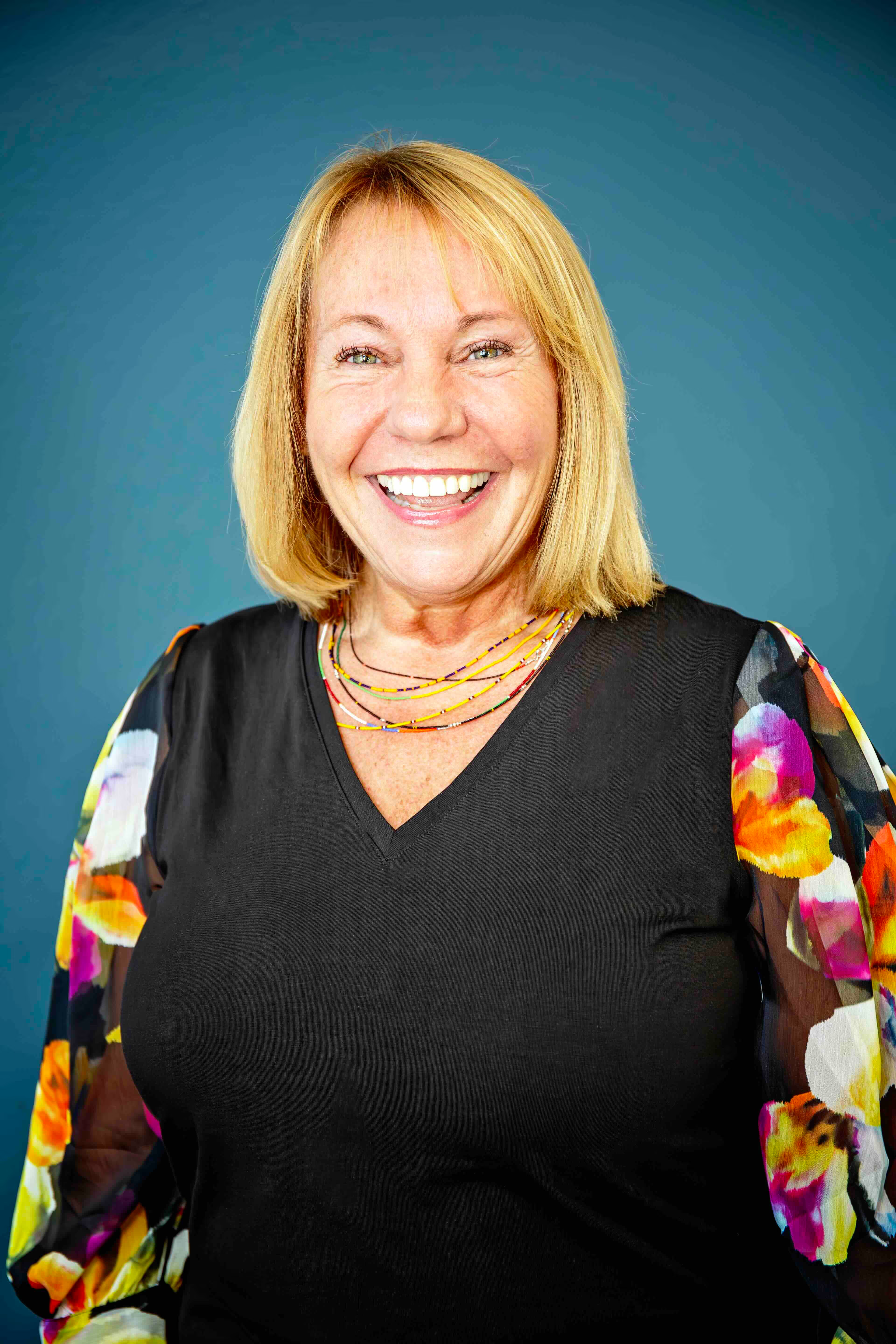
Dr. Jeri LaVigne, EdD, PhD
Dr. Jeri LaVigne is an integrative psychologist and functional neurology specialist who has spent three and a half years flying in to lead the mind-body side of the clinic's regenerative work — over 750 procedures and counting.


Related Episodes


Let's connect!
Whether you have questions, require consultation, or wish to invite Dr. Crawford to speak at your event or conference, we encourage you to reach out.
Talk With Dr. Crawford